ServicesWindow Tint
Window Tint in Florin
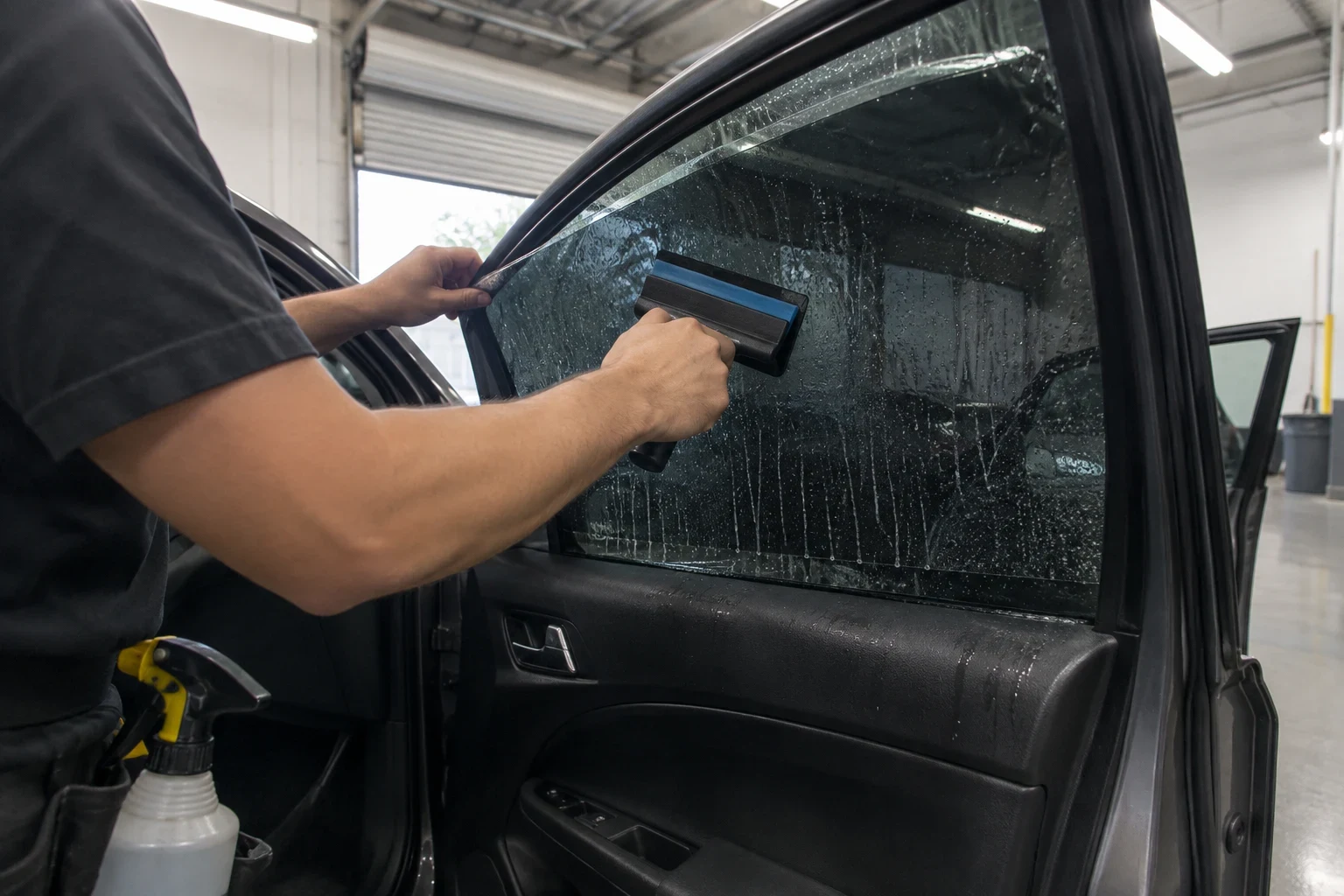
We install window tint that keeps your cabin cooler, blocks UV and cuts glare without making the car hard to see out of at night. Before anything is cut, we walk you through the film options so you choose the one that fits how you drive.
Choosing the film matters more than choosing the shade
Most people come in asking how dark to go. The better first question is what the film is made of, because that decides how much heat it actually stops, how long the color holds and whether it interferes with anything in the car.
Dyed film is the entry point. It darkens the glass and cuts glare, but it does little against infrared heat and can fade toward purple over the years. Carbon film holds a neutral charcoal color, rejects more heat and does not block phone or GPS signals the way older metallic films can. Ceramic film uses non-metallic particles to reject a large share of infrared heat, even in lighter shades, which helps on long Sacramento-area summer drives when the cabin bakes in a parking lot.
We have been tinting cars for 6 years, and our lead installer has 15 years of experience with these films. That time shows up in the details: clean edges, no lifted corners and rear glass that lies flat over the defroster lines.
What a window tint install includes
- A film consultation
- We show you dyed, carbon and ceramic samples side by side and explain the trade-offs in heat rejection, clarity and cost. You leave the conversation knowing why one film suits you better than another.
- Glass prep
- Every window is cleaned and the edges are scraped of debris, since a single speck under the film becomes a visible bubble. Door panels and seals are protected while we work.
- Film cut to each window
- Film is cut to the exact shape of each pane. On the back glass, we heat-form it so it follows the curve instead of creasing.
- Legal shade guidance
- California limits how dark the front side windows can be, and only a strip at the top of the windshield may be tinted. We point out which shades stay within the rules for each window.
- Old tint removal when needed
- If faded or bubbling film is already on the car, we remove it and the leftover adhesive first, taking care around the rear defroster lines.
Signs your car is ready for new tint
The cabin is hot within minutes
If the steering wheel and seats are too hot to touch after a short stop, the glass is letting in too much infrared heat. A carbon or ceramic film addresses that directly.
Old film has turned purple
Purple tint is dyed film breaking down. It no longer does much for heat and usually looks worse every season.
Bubbles or peeling edges
Adhesive failure lets air and moisture under the film. Once it starts, it spreads, and the only fix is removal and a fresh install.
Your interior is fading
Cracked dashboards and sun-bleached seats come from UV exposure. Quality film blocks nearly all UV, which slows that damage.
Glare makes driving tiring
Low sun on morning and evening commutes can be hard on the eyes. Tint reduces glare while keeping the view clear.
What sets the price of window tint
Price depends mostly on the film you choose and how much glass the car has. We quote by phone once we know the vehicle and the film, so the number reflects your car rather than a generic package.
Film type
Dyed film is the most affordable option. Carbon is a step up, and ceramic is priced highest because its particles stop far more infrared heat.
Vehicle size and shape
An SUV with rear quarter glass has more windows than a coupe. Steeply curved back glass also takes more time to form.
Removing old tint
Stripping failed film and adhesive adds labor, especially on back glass with defroster lines.
Windshield strip
Adding a tinted strip across the top of the windshield is a separate piece and adds to the total.
How your tint day runs
- 1
Film and shade decided on the phone
We talk through your car, how you use it and which film fits. You get a quote and an idea of how long the car will be at our shop.
- 2
Drop-off and prep
You bring the car in. We remove any old film, then clean and prep every window before any new film touches the glass.
- 3
Install and finishing
Film is fitted, heat-formed where the glass curves and squeegeed down so the edges sit tight. We check each window in good light before calling it done.
- 4
Pickup and curing
We walk you around the car and explain the cure. Keep the windows rolled up for a few days, and expect a slight haze or small water pockets at first; they clear as the film dries.
Window tint questions
How dark can I legally go in California?
Front side windows must let in at least 70 percent of light, so they can only take a very light film. Rear side windows and the back glass can be darker. The windshield may only be tinted along a strip at the top. We will tell you which shades fit each window before we install.
Is ceramic film worth it over carbon?
It depends on how much heat bothers you. Carbon gives a good color and solid heat rejection for the cost. Ceramic rejects more infrared heat, even in light shades, which matters most on the front windows where you cannot go dark. If your car sits in the sun a lot, ceramic is usually the better fit.
Will tint affect my phone or GPS signal?
Carbon and ceramic films are non-metallic, so they do not interfere with phone, GPS or radio signals. Older metallic films can, which is one reason we steer most drivers toward carbon or ceramic.
When can I roll my windows down?
Give the film a few days to bond to the glass before using the switches. While the adhesive is still soft, the glass sliding into the door seal can drag on the lower edge of the film and pull it loose. In cooler weather the cure takes a little longer, so we will tell you what to expect at pickup.
Can you tint over my old film?
No. New film over old film traps the defects underneath and will not bond well. We remove the old film and adhesive first, then install fresh.
Find the right film for your car
Tell us your vehicle and what bothers you most, whether it is heat, glare or a fading interior. We will explain the film options and give you a quote by phone.