ServicesWindshield Protection Film
Windshield Protection Film in Florin
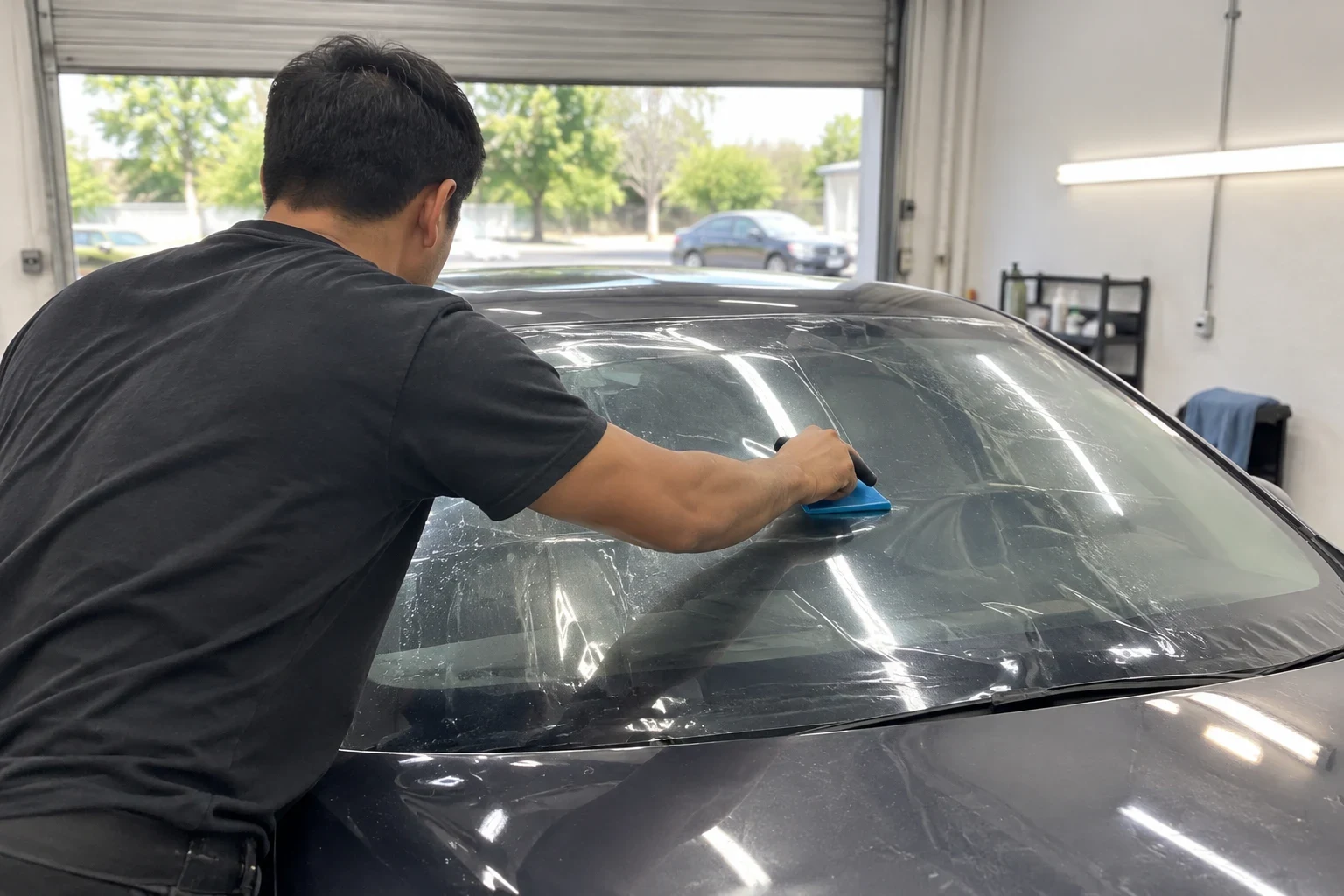
We install a thin, optically clear film on the outside of your windshield. It takes the gravel strikes and wiper grit that would otherwise chip or pit the glass, and when it wears, we replace the film instead of the windshield.
A sacrificial layer for the glass you look through
Windshield glass is hard but brittle. A small stone at freeway speed can leave a star chip, and years of road grit leave fine pitting that glares at night. Windshield protection film sits on the outer surface and absorbs much of that energy before it reaches the glass.
The film is a different material from the clear bra we use on paint. It has to stay sharp through a wiper blade's path and hold up to washer fluid, so windshield films use a harder top coat and tighter optical standards. We walk you through how the options compare on clarity, impact resistance and how long the surface holds up, then you choose.
This is a good fit for newer cars with expensive glass, vehicles with cameras and sensors behind the windshield, and anyone who spends a lot of time on Highway 99 behind trucks. It will not reverse damage already in the glass, and we will tell you that up front.
What the install includes
- A look at your glass first
- We check for chips, cracks and pitting under shop lighting. Anything already in the glass will still show under clear film, so you know what to expect before we start.
- Film chosen for your windshield
- We explain the difference between the films we carry: how thick each is, how hard the top coat is and how clear it reads at night. You pick based on how and where you drive.
- Deep cleaning and decontamination
- The outer glass is clay-cleaned and wiped down to remove road film, wax and mineral spots. Film only bonds as well as the surface underneath it.
- Fitted around sensors and mounts
- Rain sensors, lane cameras and toll tag areas need careful handling. We fit the film so the camera's view stays clean and the sensor zone works as it did before.
- Sealed edges and aftercare notes
- Edges are finished tight to the glass so water and wiper action don't lift them. You leave with plain instructions on washing, wiper use and the first few days of curing.
When windshield film makes sense
You just replaced a windshield
A new windshield on a modern car can mean camera recalibration on top of the glass itself. Protecting it early is the simplest way to avoid doing that again.
Fine pitting catches the light
If oncoming headlights or a low sun turn your windshield into a haze of tiny sparkles, the glass surface is wearing. Film on new or replaced glass keeps that from building up again.
Your commute puts you behind trucks
Gravel haulers, construction zones and long freeway runs mean steady small impacts. Film doesn't make glass unbreakable, but it takes the hits that cause most chips.
You already protect the paint
If the front of your car has paint protection film, the windshield is the large, exposed surface left. Many owners add both so the whole front end is covered.
What moves the price
Windshield film is priced per vehicle, and a few things change the time and material involved. We go through them on the phone and give you a quote that reflects your car, not a guess.
Windshield size and curve
A large, steeply raked windshield uses more film and takes longer to shrink and lay flat than a smaller, flatter one.
Film type
Films differ in thickness and top coat hardness. A tougher, clearer film costs more and usually lasts longer under wiper wear.
Sensors and camera housings
Windshields with driver-assist cameras, rain sensors or heated wiper zones need more careful trimming and checking.
Removing old film
When a worn layer from an earlier install is still in place, we strip it and clear every trace of leftover glue first. That adds shop time, since new film needs bare, clean glass to bond properly.
How the day runs at our shop
- 1
Drop-off and walk-around
You bring the car to our shop and we look at the windshield together. We point out any existing chips and confirm the film you chose.
- 2
Prep the glass
We wash, clay and degrease the outside of the windshield, then mask nearby trim. Wipers are lifted out of the way.
- 3
Cut and install
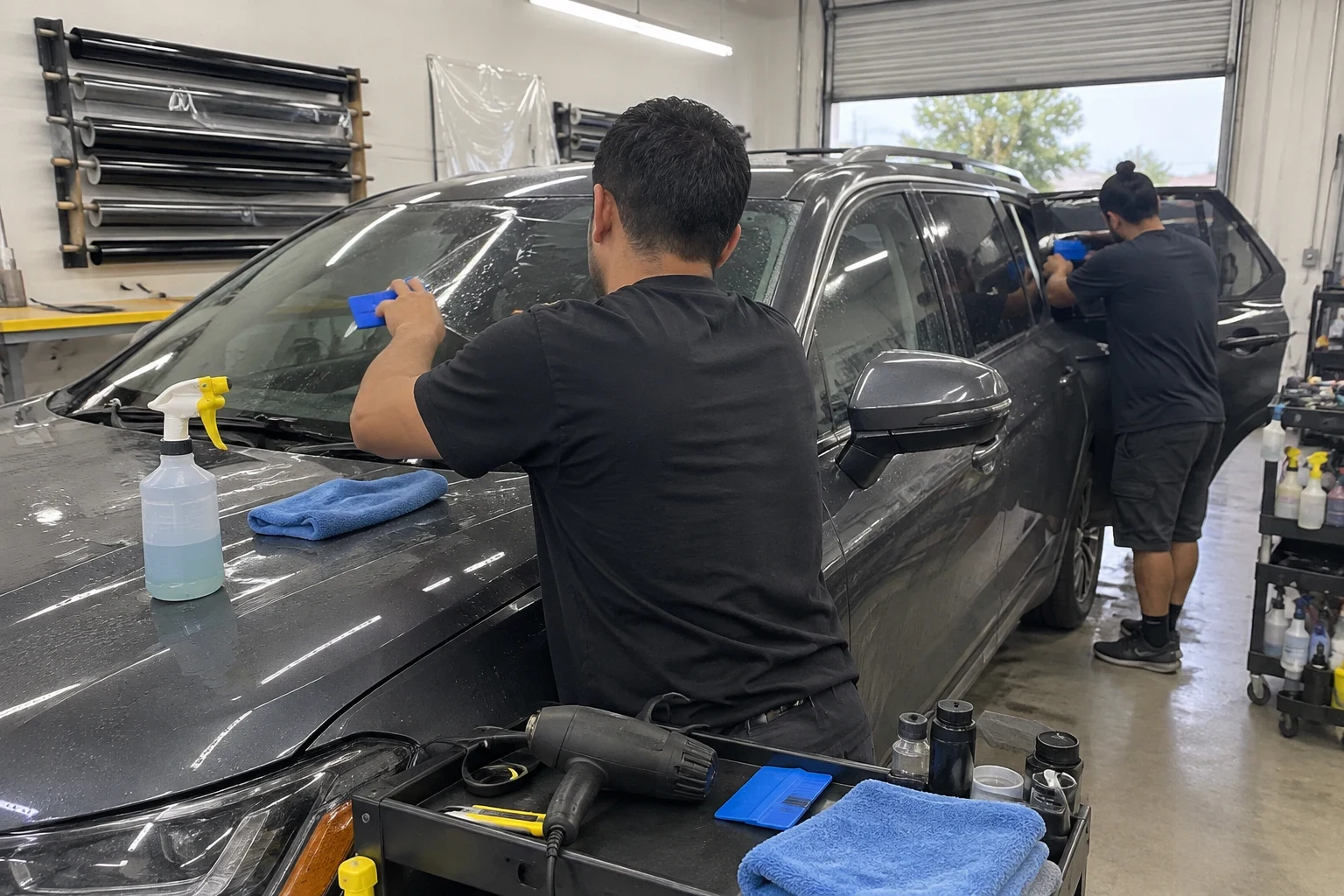
The film is cut to your windshield's shape, laid with a slip solution and squeegeed from the center out. Curved glass takes patience, and our lead installer brings 15 years of experience to that part of the job.
- 4
Finish and inspect
Edges are sealed and we check the film from inside the cabin, in different light, for clarity and any trapped moisture. Then we go over aftercare with you.
- 5
The first few days
A faint haze while the film cures is normal and clears on its own. We ask you to hold off on automatic washes for a few days and keep wiper blades clean.
Windshield film questions
Will the film affect how clear my view is?
A good windshield film is optically clear and you shouldn't notice it while driving. We check it from the driver's seat after the install, including against bright light. Damage already in the glass, like pitting or chips, will still be visible underneath.
Is this the same as tinting my windshield?
No. Windshield protection film is clear and made to resist impacts and wear, not to darken the glass. If you want heat rejection on the side and rear glass, that's our window tint service, and we can talk through both on the same call.
Does it work with my lane-keeping camera and rain sensor?
Yes, when it's installed with care. We keep the camera's view free of edges, bubbles and dust, and we confirm the rain sensor responds as it did before the film went on.
How long does the film last?
It is a sacrificial layer, so it wears with wiper use and road grit over time. When it gets scuffed or takes a hard hit, we remove it and install new film, which costs far less than replacing the windshield.
Can you put it over a chip?
We can, but the chip will still show and the film won't repair it. It's usually better to have the chip repaired first so the glass is sound before it's covered.
How long have you been doing this?
Our shop has been open for 6 years, and windshield film is part of the work we do every week. Every install happens indoors at our shop, not in a parking lot, so dust and wind stay away from the glass while the film goes on.
Protect the glass before the next rock finds it
Tell us about your car and how you drive, and we'll explain which film suits it. You'll get a straight answer on what it can and can't do.